Showing posts with label Tech news. Show all posts

Thursday, January 19, 2012

Tapping Your Smartphone's Processing Power for Classic Photography

The stumbling-block to using a phone as an all-in-one solution for photography is basically that the lenses aren't as good as those on any dedicated camera. While you would expect a DSLR (Digital Single Lens Reflex) camera to sport a better lens, even the most basic, sub-hundred-dollar point-and-shoots have higher quality glass than the best phones.

Manual adjustments for exposure and other settings like white balance are also missing on many smartphones, as is an optical zoom that provides higher quality close-ups than a processor-driven zoom.

However, there are two things the smartphone, resplendent with camera, does offer. One is a seriously powerful computer processor -- much more so than any camera's -- and the second is filter- and editing-style apps -- tons of them.

My solution to the dichotomy is to use an existing camera to take the shots, and discard the laptop or PC commonly used for editing, substituting a smartphone or tablet for the crunching. Why not? You gain portability -- two pocket-sized devices; you gain the effort that developers have put into smartphone photographic processing apps; and you retain the better glass.

The downside is getting the shots over to the phone from the camera. But you can get around that with some planning.
Zoho

Step 1

Plan how you're going to get the images out of the camera and into the phone or tablet. I've been using a 2006 Nikon Coolpix P2 point-and-shoot whose 3x, 7.5-26.3mm zoom lens I adore. I've had photographs accepted by my stock agency with that camera -- unusual for point-and-shoots.

This inexpensive camera conveniently has a full-sized SD card slot. I've coupled the P2 with the other part of my camera kit, a Toshiba Thrive 10.1-inch Android tablet, also with a full-sized SD slot. Hot-swapping the cards works easily for me like this.

You can achieve the same effect with micro SD card-to-full-sized SD card adapters that are packaged with many micro SD cards.
 

Step 2

Install some of the killer camera filter and editing apps onto your phone or tablet.

The two I've been using: Vignette (Nasdaq: VIGN) Demo from Neilandtheresa, (free) for its filters; and Adobe (Nasdaq: ADBE) Photoshop Express from Adobe Systems (free) for its editing software. Both have paid versions with varied additional benefits, including full resolution.
 

Step 3

Pull the full-sized SD card or micro SD card with adapter out of the camera, making sure that you follow the camera manufacturer's instructions relating to unmounting the card.

This will avoid corrupted files.
Step 4

Remove the adapter from the card if necessary and slot the card into the phone or tablet.

Allow the card to mount, and launch the app you want to use.
Step 5

Import the image. Vignette Demo allows you to import images using file managers that you may or may not already have on your device.

I've successfully imported from stock Gallery and also Root Explorer. Touch the "Import" button and choose "Gallery." The SD card should be listed.

vignette

Select the image you want to work with by touching it, and it will load into the Vignette app using the last settings used.
Step 6

Apply the filter by using the "Effects" and "Adjust" settings in Vignette Demo.

I've been using Fake HDR, which lowers global contrast and raises local contrast, and Infrared, which provides high contrast for grim, theatrical landscapes.
Step 7

Make further edits with other applications. Photoshop Express on a tablet or phone is worth experimenting with because it faithfully creates the same kind of edits that you'd ordinarily do on a cumbersome PC.

Install a file manager if you don't already have one. Look in the Market. I use paid Root Explorer, but there are free ones too.

Browse to the SD card image files and cut the file you want to work on. Then browse to the "Camera" folder within the DCIM folder on your device and paste it there. This can be complicated because there may be more than one SD card folder listed. The device often has a built-in SD card you may be unaware of. Your inserted card will likely be "sdcard2" or something similar within a folder called "mnt."

Paste the file into "Camera," and when you open Photoshop Express, the file will be listed under the "Phone" tab there and you'll be able to work on it with the "Edit" button. After working on it, press "Save," and then refresh the file manager to see it listed. 


Source

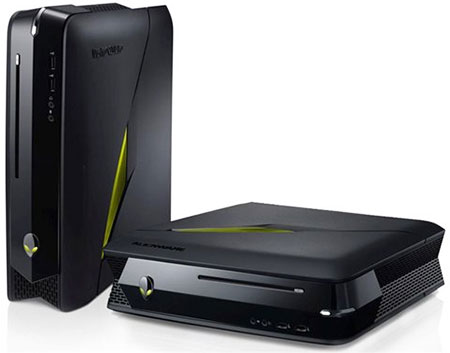
Alienware Packs Big Gaming Power Into Little Box

Dell's (Nasdaq: DELL) gaming computer brand, Alienware, has released a new desktop computer that -- while not quite in keeping with the trend toward mobile gaming -- is compact, powerful and sleek.

Alienware X51
The Alienware X51

The X51, which weighs about 12 pounds and measures roughly 13 inches tall by 12.5 inches deep by 4 inches wide, is unobtrusive enough to be placed near a television. It is powered by a range of graphics cards and several Intel (Nasdaq: INTC) Core processors. Pricing starts at US$699 and goes to $1,149, depending on how the device is configured.

Options in the low-end version include a second-generation Intel Core i processor, 8 GB of 1333 Mhz dual-channel memory, a 1-GB GDDR5 Nvidia (Nasdaq: NVDA) GeForce GTX 555 video card with 330W PSU, a slot-loading dual layer Blu-ray reader, and a standard integrated wireless LAN card.

The $1,149 model is equipped with the Intel Core i7 processor, a 1 GB GDDR5 Nvidia GeForce GT 555 graphics card, and 8 GB of RAM.

Alienware did not respond to our request for further details.

The Mobile Trend

With the X51's diminutive size, it is easy to miss the fact that it is not designed to be mobile -- a major driving force in the gaming market now.

Gaming captured the largest proportion of a mobile user's time spent with mobile applications -- a whopping 49 percent -- according to Flurry. Social networking came next, but at a distant 30 percent.

A majority of tablet owners who play video games use a console or a handheld gaming device less often as a result of owning their tablet, according to research from GfK MRI's iPanel.
Gaming Laptops

Alienware isn't ignoring that trend -- last year, it released three powerful laptops including the M18x -- which it called the most powerful 18-inch gaming laptop in the universe and "a true desktop replacement." The other laptops are the M14x -- with enhanced performance and a focus on portability -- and an upgraded M11x. They also sport second-generation Intel Core i processors.

That said, there is still a place for the little X51 desktop unit in the current gaming environment, J. Gerry Purdy, principal analyst of mobile and wireless at MobileTrax, told TechNewsWorld.

"There are really two mobile stories unfolding with gaming," he said. One is that more people are using smartphones or tablets, and providers are extending the availability of some games on these platforms. The second one are the wireless initiatives, where you are seeing controllers become de facto smartphones or computers."

College student dorm rooms, for instance, are typical venues for these devices, noted Purdy. "The gaming market is huge enough, especially among the 18-24 age group, to accommodate a number of different form factors 


Source

Tuesday, January 17, 2012

ION Audio Road Rocker

ION Audio has just introduced its latest piece of consumer electronics – an ultra-compact speaker system that targets iOS-powered devices, microphones, instruments and other miscellanous Bluetooth-powered music players. Known as the Road Rocker, it debuted at the recently concluded CES in Las Vegas, and is tiny enough to be carried around with you wherever you go, regardless of whether it is meant for a camping trip, tailgating, parties and most definitely road trips.

Just how does the Road Rocker work? Well, it has Bluetooth connectivity to thank, as it will stream music wirelessly thanks to Bluetooth – so basically most modern smartphones are compatible with it, in addition to a bevy of Bluetooth enabled devices such as tablets and portable media players. Do not sneer at its size, as this is one “pooch” that has quite a mean “bark” despite its size.

Despite being incredibly compact, it still packs in a high-quality full-range speaker, a 1/4-inch input for connecting microphones or instruments, and even comes with a bass port which will offer music an additional low-end thump. It does not matter whether you are using the ION Audio’s Road Rocker to make sure everyone at your party has a rocking good time, or to keep your guitar skills sharp through practice even when you are on vacation. Sporting a built-in rechargeable battery, the Road Rocker will be able to deliver up to eight hours of uninterrupted music.

Not only that, it will come with an 1/8-inch input and cable that will let non-Bluetooth enabled music players and devices hook up to it. The integrated cradle will make sure your iPad, iPhone or other device remains nice and secure on top of the Road Rocker even when you are having the time of your life with your favorite tracks, good friends, and great food. No idea on pricing though, but we do look forward to its general release to the market later this year.

Source

LG's 55-inch OLED TV Snags CNET's Best of CES

Best of CES 2012 Award Winners

Best of Show: LG 55EM9600 OLED TV
The first 55-inch OLED TV
announced as shipping in 2011, and the only one to get an actual model number and public ship date ("Q3"), the 55EM9800 promises the superb all-around performance of OLED (absolute black levels, ultra-fast panel and excellent viewing angles) in an ultra-thin panel. People's Voice: Razer Project Fiona
Razer's Project Fiona concept gaming tablet, shown at CES 2012, suggests that Windows 8 is a serious player in portable gaming, and that Razer is serious about moving into manufacturing computers.
Cameras: Fujifilm X-Pro1
Fujifilm bolsters its reputation as a quality camera company with the new X-Pro 1, its first mirrorless model. Targeted at professionals, the camera incorporates several innovations, including a promising new sensor and lovely hybrid viewfinder, all in a sleek retro design.
Car Tech: QNX CAR 2 mobile apps platform
QNX shows us its vision for the future of dashboard technologies, including an innovative application of NFC technology to instantly and automatically Bluetooth pair a smartphone, Ultra HD voice technology that brings stereo CD quality audio to phone calls, and an apps integration for both front and backseat passengers.
Cell phones: Nokia Lumia 900
Nokia uses the Consumer Electronics Show to hold a coming-out party for its new Windows Phone-based Lumia 900, with a 4.3-inch AMOLED screen and dual cameras.
Emerging Tech: MakerBot Replicator
The MakerBot Replicator one-ups the Cube 3D with "dualstrusion" technology, meaning it can print objects in multiple colors and materials. Pre-orders available now for $1,999, shipping in 6 weeks.
Home Theater: Simple.TV
The Simple.TV DVR might just be the next-big thing for cable-cutters. It's improbably a DVR without a built-in hard drive or video output, instead letting you supply your own hard drive, then stream live and recorded over-the-air TV to the Simple.TV app available on iPad, Roku, Boxee, Google TV. Simple.TV can stream your live and recorded over-the-air TV outside your home network (Slingbox-style), as long as you sign up for the $5/month premium service. Think of it like your own personal cloud for your over-the-air TV.
PCs: HP Envy 14 Spectre
The newly announced HP Spectre is the most glass-covered laptop we've ever seen, with it's all-glass lid and palm rest. At a CES devoid of many eye-popping laptops, the Spectre could be the most stylish of the bunch. Beats Audio is included on this premium ultrabook, along with an inset analog wheel for volume control, NFC support, and HP Wireless Audio.
Software and apps: BlueStacks for Windows 8
Windows 8 just got a kick in the apps via BlueStacks. The program, which will ship pre-installed on select Windows 8 machines, will bring the entire Android marketplace to Microsoft's nascent OS. So when Windows 8 launches, more than 400,000 Android apps will be at your fingertips.
Networking: D-Link Amplifi HD Media Router 3000
When released later this month, D-Link's Amplifi HD Media Router 3000 DIR-857 router will be the first on the market that supports USB 3.0, concurrent 450Mbps dual-band with cloud-based and HD Fuel feature that power media streaming.
Tablets: Asus Memo 370T
This quad-core, Android 4.0 tablet proves that premium performance doesn't require a premium price. In spite of its $250 asking price, this tablet comes stock with 1GB of system RAM, 16GB of storage, an 8 megapixel camera, HDMI output, and a 1,280x800 resolution IPS screen.
TVs: LG 55EM9600 OLED TV
The first 55-inch OLED TV announced as shipping in 2011, and the only one to get an actual model number and public ship date ("Q3"), the 55EM9800 promises the superb all-around performance of OLED (absolute black levels, ultra-fast panel and excellent viewing angles) in an ultra-thin panel.

Source - CESweb

iTunes Match adds 19 more countries in Latin America, Europe

Earlier today, we noted that iTunes Match had begun going live in Netherlands, following last week's news of an agreement between Apple and Dutch copyright oversight group Buma/Stemra.

But as Apple now details on its iTunes Match availability page, the service actually launched in 19 new countries today, focusing on Latin America, the Baltic states, and the Netherlands.

The full list of new markets includes Argentina, Bolivia, Chile, Colombia, Costa Rica, Dominican Republic, Ecuador, El Salvador, Estonia, Guatemala, Honduras, Latvia, Lithuania, Netherlands, Nicaragua, Panama, Paraguay, Peru, and Venezuela.

Today's additions bring the total number of countries with iTunes Match availability to 37, with Estonia, Latvia, Lithuania, and the Netherlands also gaining iTunes in the Cloud compatibility with music and music videos for the first time.

The Latin American countries seeing iTunes Match debut today already had the iTunes in the Cloud functionality, which allows users to re-download purchased content any number of times to devices associated with their iTunes Store accounts. 


Source - macrumors

Previewing 'Windows 8'

REDMOND, Wash. - June 1, 2011 - Today, at the D9 Conference, we demonstrated the next generation of Windows, internally code-named "Windows 8," for the first time. Windows 8 is a reimagining of Windows, from the chip to the interface. A Windows 8-based PC is really a new kind of device, one that scales from touch-only small screens through to large screens, with or without a keyboard and mouse.
Microsoft Reimagines Windows at BUILD

The demo showed some of the ways we've reimagined the interface for a new generation of touch-centric hardware. Fast, fluid and dynamic, the experience has been transformed while keeping the power, flexibility and connectivity of Windows intact.

Here are a few aspects of the new interface we showed today:
•  

Fast launching of apps from a tile-based Start screen, which replaces the Windows Start menu with a customizable, scalable full-screen view of apps.
•  

Live tiles with notifications, showing always up-to-date information from your apps.
•  

Fluid, natural switching between running apps.
•  

Convenient ability to snap and resize an app to the side of the screen, so you can really multitask using the capabilities of Windows.
•  

Web-connected and Web-powered apps built using HTML5 and JavaScript that have access to the full power of the PC.
•  

Fully touch-optimized browsing, with all the power of hardware-accelerated Internet Explorer 10.

We also showed effortless movement between existing Windows programs and new Windows 8 apps. The full capabilities of Windows continue to be available to you, including the Windows Explorer and Desktop, as does compatibility with all Windows 7 logo PCs, software and peripherals.
Julie Larson-Green, Corporate Vice President, Windows Experience
Click for high-res version.

Although the new user interface is designed and optimized for touch, it works equally well with a mouse and keyboard. Our approach means no compromises - you get to use whatever kind of device you prefer, with peripherals you choose, to run the apps you love. This is sure to inspire a new generation of hardware and software development, improving the experience for PC users around the world.

Today, we also talked a bit about how developers will build apps for the new system. Windows 8 apps use the power of HTML5, tapping into the native capabilities of Windows using standard JavaScript and HTML to deliver new kinds of experiences. These new Windows 8 apps are full-screen and touch-optimized, and they easily integrate with the capabilities of the new Windows user interface. There's much more to the platform, capabilities and tools than we showed today.

We are excited to bring an innovative new platform and tools to developers and see how their creativity jumpstarts a new generation of apps. Windows 8 apps can use a broad set of new libraries and controls, designed for fluid interaction and seamless connectivity. Apps can add new capabilities to Windows and to other apps, connecting with one another through the new interface. For example, we showed today how a developer can extend the file picker control to enable picking from their own app content or from within another Windows 8 app, in addition to the local file system and the network. We're just getting started.

And this isn't just about touch PCs. The new Windows experience will ultimately be powered by application and device developers around the world - one experience across a tremendous variety of PCs. The user interface and new apps will work with or without a keyboard and mouse on a broad range of screen sizes and pixel densities, from small slates to laptops, desktops, all-in-ones, and even classroom-sized displays. Hundreds of millions of PCs will run the new Windows 8 user interface. This breadth of hardware choice is unique to Windows and central to how we see Windows evolving.

The video below introduces a few of the basic elements of the new user interface. Although we have much more to reveal at our developer event, BUILD (Sept. 13 - 16 in Anaheim, Calif.), we're excited to share our progress with you.
Building "Windows 8" - Video #1
View in stand-alone player (.mp4)
View on YouTube

Today's demonstration followed our announcements earlier this year about Windows 8 running on System on a Chip (SoC) processors, and our browser engine innovations and significantly increased standards support in Internet Explorer 10. Windows 8 extends these innovations and reimagines every level of the Windows architecture - the kernel, networking, storage, devices, user interface - all building on the broadest and richest ecosystem of software, peripherals and devices.

We have so much more on the way! We're working very hard to get the product ready for early testing, and we plan to kick off our engineering dialogue through our team blog, just as we did for Windows 7.

So please stay tuned - we have a lot of cool innovation coming in the months ahead 


Source - Microsoft

Friday, January 13, 2012

Micro Express MicroFlex 79B - world best PC


Intel recently pulled back the curtain on its enthusiast-level Sandy Bridge Extreme Edition processor, and Micro Express has built its new MicroFlex 79B around it. This hulking machine is surprisingly wallet-friendly (okay, it's still $2000, but you get a lot of power for the price), and unsurprisingly excellent in performance, both generally and graphically. You’ll also find 16GB of RAM, a ton of ports, and a roomy interior, though a meager power supply may limit your upgrade options, unless you swap it out. Our review model, priced at $1999, comes packed with a the aforementioned Intel Core i7-3930K processor, as well as an Nvidia GeForce GTX 580 graphics card and 16GB of RAM. Also inside is a 1TB hard drive and a 120GB solid-state boot drive. Finally, this model has built-in Bluetooth and runs a 64-bit version of Windows 7 Home Premium.

In our WorldBench 6 benchmark tests, the MicroFlex 79B scored 219. That number will place the MicroFlex 79B right near the top of our Performance Desktop list when it's updated, though the machine is still a few points behind the Origin Genesis 2011. Of course, the Genesis 2011 costs well over $4000 more than the MicroFlex 79B.

Graphics performance is strong, care of that beefy graphics card. On our Far Cry 2 high-quality graphics tests, the MicroFlex 79B averaged a frame rate of 80.7 frames per second. When pitted against S.T.A.L.K.E.R.: Call of Pripyat at the Ultra settings, it earned 37.1 frames per second. Pripyat is still one of the most hardware-intensive titles around, and those scores are certainly impressive.

The MicroFlex 79B is housed in a hulking black chassis. Though the front end looks a bit like an insect’s carapace, the case is pretty standard. Its left side has a large, irregularly-shaped plexiglass window, while the right side is plain.

For convenience, a few ports are on the front of the machine (near the top, so you can use them when the system is below your desk). These ports include headphone and microphone jacks, plus two USB 2.0 and two USB 3.0 ports. The "carapace" part of the front is actually a door, which opens up to reveal your optical drive (in this case, a Blu-ray burner), along with a multi-format card reader and an additional USB 2.0 port.

The rest of the ports are on the back. Here you'll find five more USB 2.0 ports, as well as one USB 2.0 Bios Flashback port, plus four more USB 3.0 ports. So that's nine total USB 2.0 ports and six total USB 3.0 ports. The back also has a gigabit ethernet port, two power eSATA ports, an S/PDIF-out, and support for 7.1 surround sound. On the graphics card are two DVI hookups as well as a mini-HDMI port.

Opening up the MicroFlex 79B is extremely easy--unscrew two thumbscrews (not hard to do), and the side panel practically falls off. The inside of the machine is roomy and very neat, thanks to black mesh tubing around most of the cables. As for expansion room--you'll find a lot of that, too, including four 5.25-inch bays (one of which is full) and six 3.5-inch bays (two of which are full). Also inside: four PCIe (x16) slots (one full), one PCIe (x1) slot, and eight RAM slots (four full). The Corsair cooling system has a physical button that lets you control the speed of the fans.

With all this, we found one problem: The model we reviewed has just a 550W power supply. That’s positively anemic for the hardware in question here--if you decide to take advantage of all of the empty space (to tuck in a second GPU, say) or take advantage of the processor’s overclocking capability, you'll have to swap it out for a more capable PSU.

The MicroFlex 79B may be huge, but it's a good kind of huge. Barring that meager power supply, it’s a very upgradable kind of huge. And at $2000, you'll have plenty of cash (well, some) left over for a proper power plant, making this a relatively inexpensive gateway into the power that Intel’s Extreme Edition CPU afford.


Source - PCWORLD

This Is Your Brain Online


Maybe the Internet won't exactly fry your brain, but it could change it in other unwelcome ways. A new study found a correlation between Internet addiction and specific brain changes often observed in alcoholics and drug addicts. There was evidence of disruption to the connections in the nerve fibers that connect brain areas involved in emotions, decision making and self-control.Maybe the Internet won't exactly fry your brain, but it could change it in other unwelcome ways. A new study found a correlation between Internet addiction and specific brain changes often observed in alcoholics and drug addicts. There was evidence of disruption to the connections in the nerve fibers that connect brain areas involved in emotions, decision making and self-control. A research team lead by Hao Lei of the Chinese Academy of Sciences used magnetic resonance imaging (MRI) to scan the brains of 35 male and female adolescents. Seventeen members of the group were classified as having Internet addiction disorder (IAD), based on interviews about their behavior.

In the brain scans of those adolescents with IAD, there were changes in the white matter of the brain, the area that contains nerve fibers. There was evidence of disruption to the connections in the nerve fibers that connect brain areas involved in emotions, decision making and self-control. The changes appeared similar to those seen in brains scans of individuals addicted to alcohol, cocaine, heroin and other drugs, the researchers noted.

The study's findings were published in the scientific journal PLoS ONE. 


Source - technewsworld

Twitter Delicious Facebook Digg Stumbleupon Favorites More